Friday, 24 March 2017

The Church of Saint Peter

The Church of Saint Peter is located on Mount Zion.  The lower level commemorates the apostle Peter’s triple denial of His Master, Jesus.


When the cock crowed, Peter recalled that Jesus said that he would deny knowing Him on three occasions.  Peter immediately repentant, cried bitter tears of remorse.


Jesus had been identified by Judas and Jesus was arrested and was lowered into a dark dungeon overnight, through a hole in the ceiling. 


The Sanhedrin gathered information to charge Jesus with and convinced some to bear false witness against Jesus.  The Sanhedrin controlled the temple and the sacrifices.  Many would have caved under the pressure of being expelled from the temple for not complying with the wishes of the Sanhedrin.


The image of The Last Supper is unusual in that there are only eleven disciples represented there. This image excludes Judas.


Above are the first century steps that Jesus was certain to have walked on.  It is these steps that connected the Kidron Valley and the Mount of Olives and Zion.


When have you been like Peter and avoided acknowledging someone?

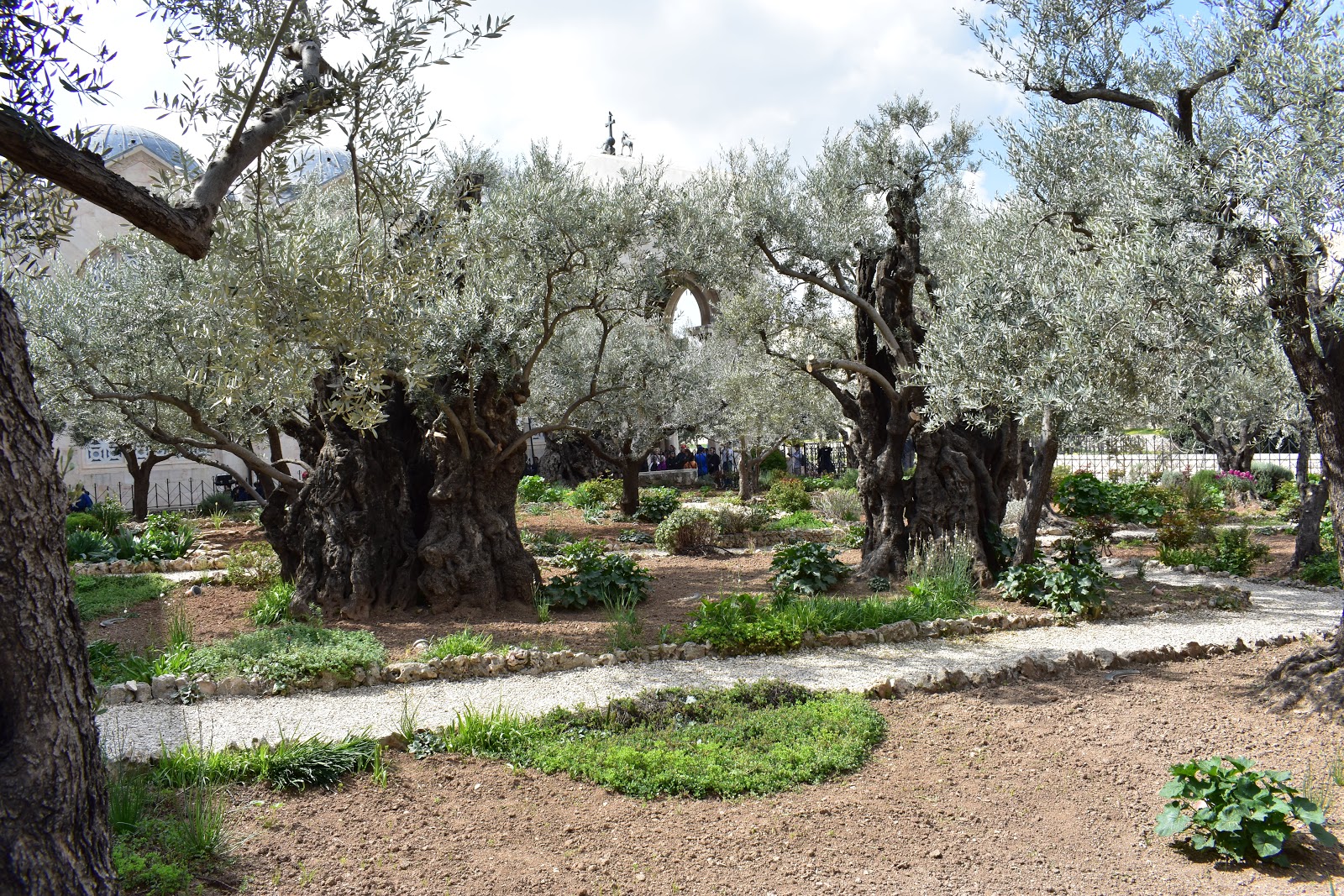
The Garden of Gethsemane

In the evening, after The Last Supper and before His arrest, Jesus spent time in The Garden of Gethsemane, with his disciples. 


It is in the Garden of Gethsemane that Jesus experiences the greatest of human emotions, so much so it is said that His sweat turned to blood.


Jesus knew that he would have to suffer great humiliation and unimaginable pain and He prayed that God would take this pain of suffering away from Him.


Jesus wanted to spend His final hours with His disciples, yet they could not stay awake.  


We took time for personal prayer and reflection in the Garden of Gethsemane, praying that we too will stay awake and be ever watchful for Jesus.


Each one of us lets people down from time to time.  Is there anyone you need to repair a relationship with at this time?

Jesus Wept

On the Mount of Olives, so much of Jerusalem lies before you.  


From the Mount of Olives, you can see The Kidron Valley, also known as Judgment Valley; Mount Moriah where Abraham was to sacrifice his son and God provided him with an animal sacrifice and Mount Zion where Jesus had The Last Supper with His disciples.


Jesus had spent three years teaching, offering forgiveness and healing. Jesus was more than just a prophet, He was the Messiah that everyone had been waiting for, but not everyone had acknowledged.


The name "Shalem", is derived from the word "shalom", meaning peace.  Jerusalem is known as "The City of Peace" or "Abode of Peace."  Jesus wept as he knew that only love could bring lasting peace to the people of Jerusalem - a peace which still alludes them today.


We celebrated Mass today at Dominus Flevit Church, which overlooks Jerusalem.  On the altar is an image of a hen with her wings outstretched to protect her chicks.  Our God is ever attentive to our needs, watching over us with love and providing protection.


How many tears have been shed by the families of those who have lost people to violence, unrest and war?

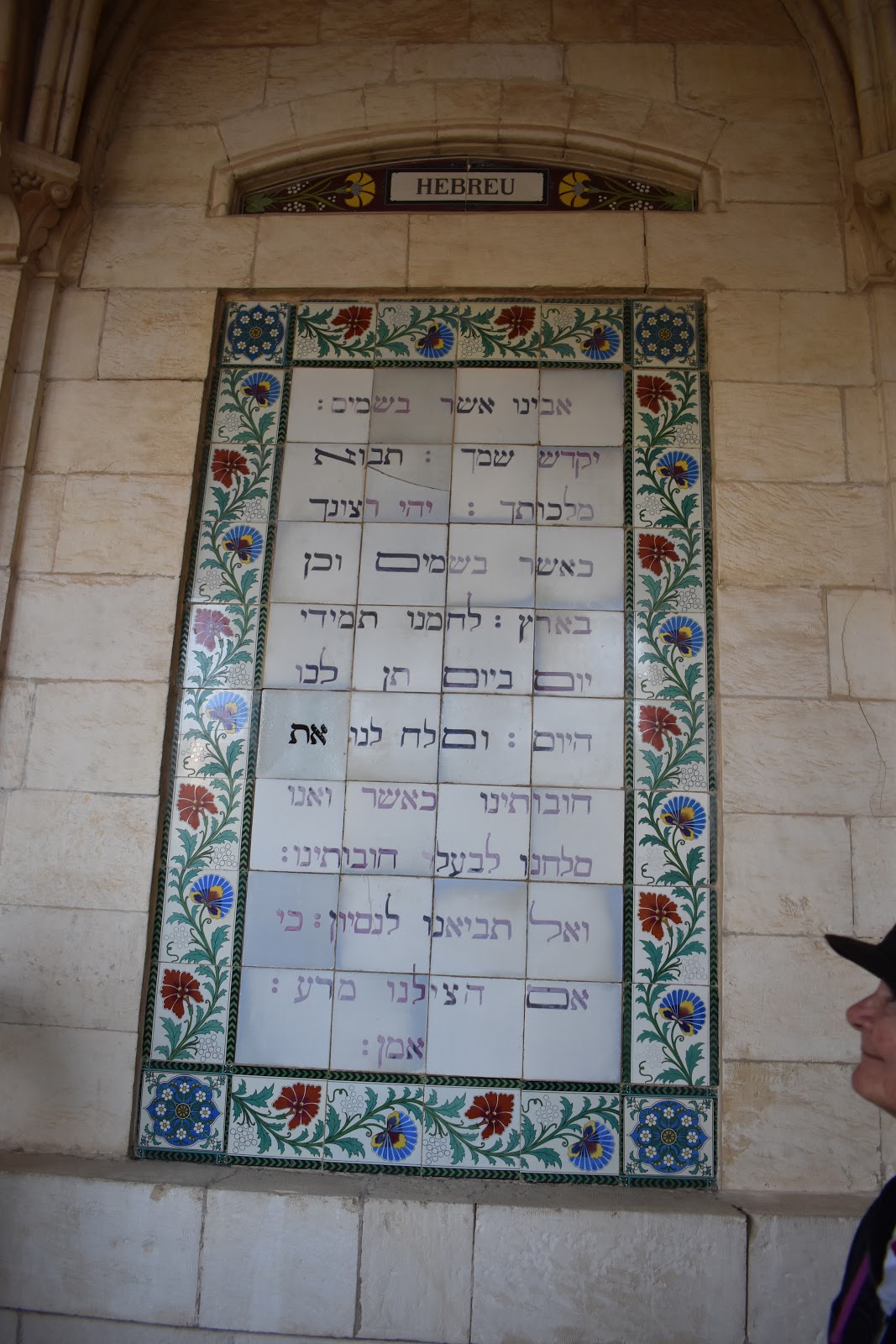
The Lord's Prayer

Have you ever wondered where Jesus taught the disciples The Lord's Prayer?  It was on the Mount of Olives.  Jesus often stopped at the Mount of Olives to pray or to rest.


The use of the term "father" is a deeply personal almost private term. 


Jesus invited his disciples as He invites us also, to form a relationship with His father, the God of all.  

He calls each one of us to be part of the Christian family and it is Jesus that unites us all.  


The Lord’s Prayer is considered to be a complete prayer and has been translated into over 1200 languages.  


Why not take the time now, to say The Lord's Prayer, slowly and carefully, considering each line. 


We said the Our Father together in the grotto pictured above, the location where the first Our Father was said.  Where was the first place that you said the Our Father?

Thursday, 23 March 2017

A Prayer for Peace

This evening we had the great privilege of listening to the stories of two courageous men, one Palestinian and the other Israeli.  Both men have suffered a great personal loss.  It is that loss that brought them together.


Both men have suffered the death of a daughter at the hands of extremists.  Rather than seek revenge, both men have committed to work for peace.  Generations of oppression and segregation, bitterness and revenge have resulted in countless lives lost.


The men spoke of the continual cycle of violence, hatred and fear.  It is their belief that the peoples of the Holy Land need to live together with respect for their common humanity.  If this does not occur on top of the earth, it will be the case under the earth regardless.


It is not written anywhere that the people of the Holy Land will be at war forever. Reconciliation is possible and necessary.  Please pray for the Combatants for Peace and the Parent Circle that they will be successful in their efforts to bring peace to the Holy Land through education, advocacy and action.


Jacob's Well


Jacob’s Well, where Jesus asked a Samaritan woman for a drink and offered her “living water”, lies in the crypt of a Greek Orthodox church at Nablus in the West Bank.


Jacob's Well is the original well from the time of Jesus - because no one can move a well that was originally more than 40 metres deep!  We listened to Bishop Michael as he read the Gospel and we too were reminded that as Christians we seek to have our thirst quenched by The Living Water - Jesus.


Come to the water, you who are thirsty, come to the water, I bid you come and be filled with the goodness I have to offer, come, listen, live.


Are you thirsty?  Have you drunk from the living water?

The Mount of the Beatitudes

Again a mountain is the location where something momentous happened.  God's ten commandments were received by Moses on Mount Sinai - but on the Mount of the Beatitudes, it is Jesus that gives the commandments.


Galilee was a challenging place for Jesus to begin His ministry.  There were Pharisees, Sadducees and numerous sects, with many people claiming to be "the one."  In less than three years, Jesus managed to get the followers that other sects and religious groups took 1000 years to achieve.


Jesus did not suggest that people live by an endless list of complicated rules - what He had in mind was more of a lifestyle change.  The beatitudes are doable things that can be incorporated into everyday life.  Don't get me wrong - many of the things Jesus asks of us are challenging, but with His help and guidance, attainable.


We celebrated Mass at an outdoor chapel at the Mount of the Beatitudes.  Hundreds of people were gathered at this sacred site and often our voices competed with those of other groups around us.


“Blessed are the poor in spirit: for theirs is the kingdom of heaven. Blessed are they that mourn: for they shall be comforted. Blessed are the meek: for they shall inherit the earth. Blessed are they which do hunger and thirst after righteousness: for they shall be filled. Blessed are the merciful: for they shall obtain mercy. Blessed are the pure in heart: for they shall see God. Blessed are the peacemakers: for they shall be called the children of God. Blessed are they which are persecuted for righteousness’ sake: for theirs is the kingdom of heaven. Blessed are ye, when men shall revile you, and persecute you, and shall say all manner of evil against you falsely, for my sake” (Matt 5:3-11)


Which beatitude do you find most challenging?